

Democracy, Tyranny, or Something Else Altogether…
Imagining Possible Futures


Dear Ones,
I want to share a bit today about what is energizing, hopeful and life affirming to me because we all need some of that - and that is imagining possible futures. Before I do so, I remind myself I do this alongside and not instead of attending to the relentless injustice and cruelty (which threatens to become “boring” through desensitization). I’ll get back to the real danger at hand later in this newsletter.
The old world is dying, and the new world struggles to be born.
The quote above is one translation of a phrase by Antonio Gramsci, an Italian writer and political theorist who was imprisoned by Mussolini’s fascist regime, but it is a sentiment that has been expressed in different ways by many in times like these. One of the silver linings of this struggle is the creativity, imagination and ingenuity arising from necessity and a surge in interest in existing (and ancient) “technologies” that only feel newly discovered to many of us.
I’d like to first honor indigenous wisdom from around the world that has, in many cases, been undermined and obscured through colonization and other acts of violence. Interest has been increasing in understanding these ways of knowing, relating and being and how they might help address some of our most pressing challenges. Here are some upcoming learning opportunities around American Indigenous wisdom that I’m looking forward to:
Exercising Indigenous Wisdom for Responses to the Climate Crisis Saturday, April 26⋅1:00 – 3:00pm at the Anita B. Gorman Conservation Discovery Center here in KCMO.
Dr. Lyla June’s Indigenous Knowledge Systems 6-week Learning Journey September 8 - October 16 online - exploring how to respectfully connect with and receive Indigenous knowledge as visitors from outside a given Native community.
My second honoring goes to contemplative practice (see Maia Duerr’s wonderful tree for examples). Many of us had our imaginations squelched by years of formal education, long work hours, or other worries and responsibilities that crowded out any spaciousness for mind play. We stop reading for pleasure, drawing, creating, and daydreaming because there’s no time or we’re too mentally exhausted at the end of the day to do much more than stare at a screen or have a beer at the pub.
A surprising side effect of my contemplative practice has been a revival of imagination. We might not be able to cut our work hours or reduce our obligations, but in my experience, my contemplative practice created a spaciousness, right in the middle of things - space that was open to possibility.
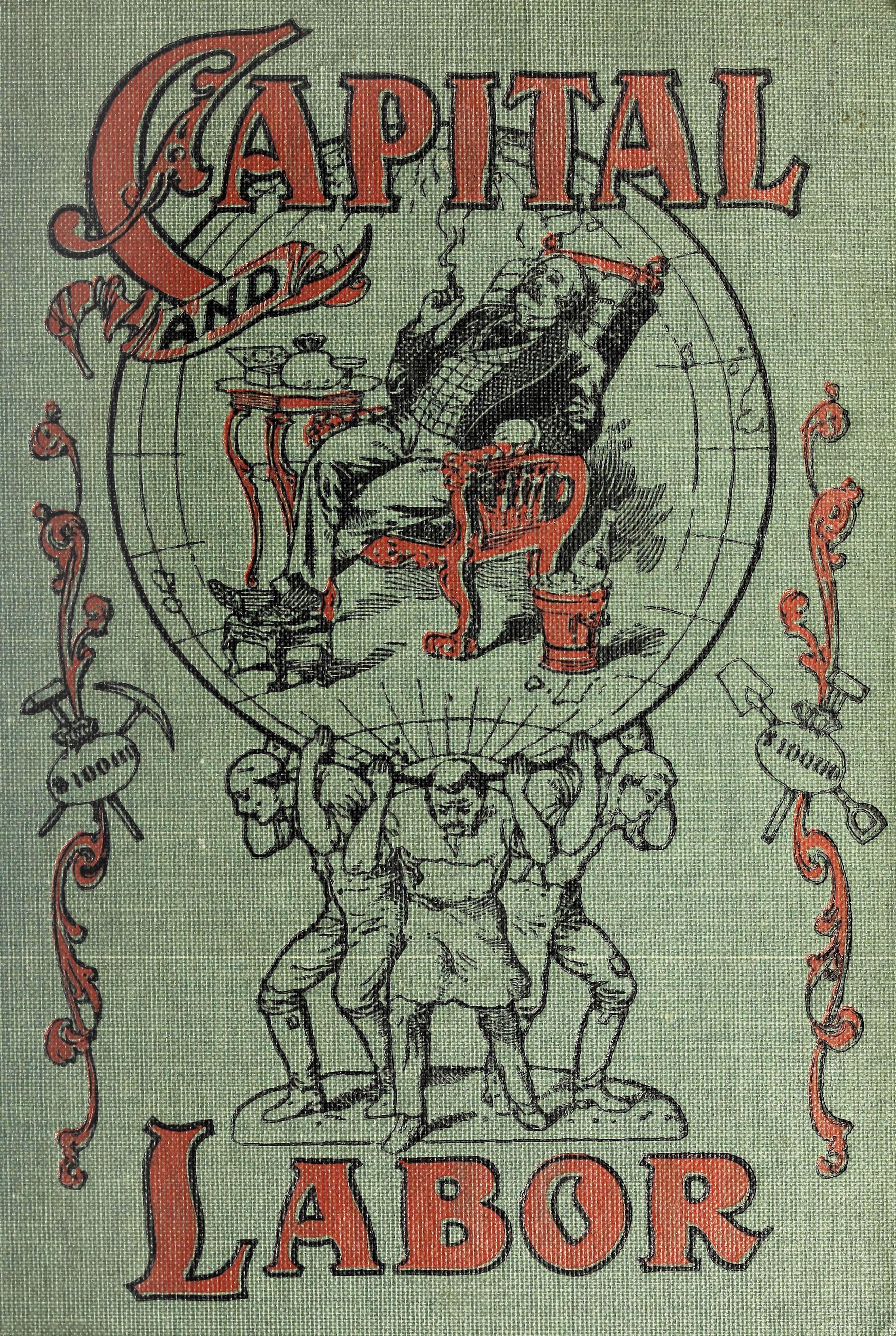
I wrote a blog post a while back about radical imagination - the ability to mentally travel through time, space and possibility and incorporate these “mind wonderings” into the present toward collective liberation. In it I provide a list of books, articles and podcasts on the topic. To me it's very exciting to see that something that has received a bit of a rap (as a kid I was sometimes known as Spacey Tracy) can become a superpower when used wisely.
Every morning I awaken torn between a desire to
save the world and an inclination to savor it.
-E.B. White
I don’t think we have to be torn, because to me these inclinations aren’t separate. It seems to me that losing our ability to savor the world is part of what made it need saving (from us). Most liberatory imagined futures involve a deep appreciation for the world and the recognition that we are of it. I’d like to share with you just a few examples of the many bright minds, organizations and movements I’ve run across that have been doing the good work of imagining futures that acknowledge our profound interconnection with all that is.
Joanna Macy’s Work that Reconnects has done a wonderful job of keeping our present moment experiences in mind as they guide us through exercises in imagination. Examples include connecting with our ancestors and all they went through, all they learned, the legacies we inherited, and then allowing ourselves to project into the future what might be possible given all of this.
In her blog post Imagine the Dream City author Anna Woiwood conjures a walkable, bike-able place with public transport, renewable energy, communal gardens, and farmers markets filled with seasonal produce where diversity and a balanced life is rewarded. She points out that parts of this dream already exist in many places. Similarly, in her book What If We Get it Right marine biologist Dr. Ayana Elizabeth Johnson explores possible climate futures through interviews and co-authored chapters with experts, poetry and art.
Moral Imaginations is a research and practice center dedicated to training what they call Imagination Activists. This organization operates from the assumption that most of the world’s challenges are not due to a lack of resources, but a failure of imagination. They help activists learn to “flex” their imagination “muscle” to “create new possibilities and new forms of action”.
Feminism and matriarchal lineages - Celeste Davis’ 3-Part Series on Patriarchal Masculinity highlights many beneficial core values that could be prioritized and embodied toward collective liberation. These may include things like equity, mutual respect, organizing ourselves in circles rather than hierarchies, valuing sharing over ownership, compassion over hyper-competition, and humility over entitlement.
Imagining possible futures isn’t liberatory if we aren’t also facing the reality of now or bringing innovations into fruition. It’s been difficult for people to know what to do with all this brilliance that already exists and is exploding onto the scene.
One of the problems that has been discussed is a lack of easily accessible unifying infrastructure that we can put our energies into. Some have called for a “shadow” cabinet. Check out Progressive Maryland, a statewide nonprofit advocacy organization with over 120,000 individual members, supporters, and organizational affiliates promoting racial, social, economic, and environmental justice through grassroots organizing, public education, and legislative advocacy. They have paid positions, chapters and a weekly memo. Perhaps this could be duplicated all over the country?
Another problem is that many of us don’t see ourselves as “activists” - we have stereotypes about what that word means. For those who came of age in the 80s, I’m including a link here to an interview with actor Jon Cryer (Duckie of Pretty In Pink fame). He’s a “reluctant activist” who felt compelled to speak out from a sense of responsibility despite the costs. A local organization, The Resilient Activist (for which I volunteer), has a wonderful article called What is an Activist, Anyway? that just might expand your vision of what activism can look like.
Despite the challenges, activism is on the rise in our country - everyday people are answering the call:
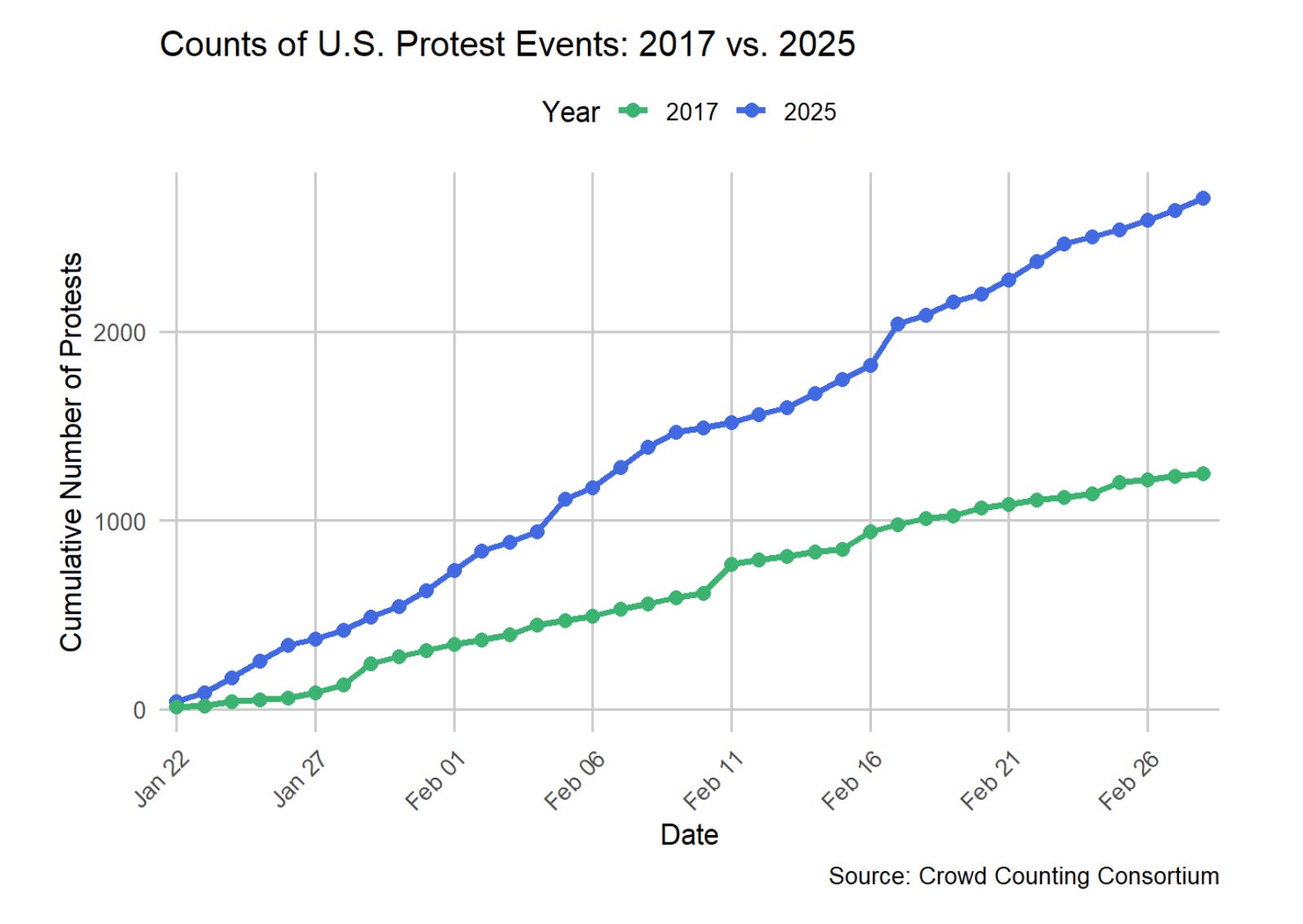
(from article: Resistance is Alive and Well in the United States by Erica Chenoweth, Jeremy Pressman, and Soha Hammam)
Although some are surrendering to the administration’s unjust and immoral demands, some courageous people are standing up. For example, Rachel Cohen, an associate at Skadden, Arps, Slate, Meagher & Flom LLP sent an email to her firm that said she was giving her two-weeks’ notice unless leaders there agreed to stand up to the administration. This is very smart because others may follow and this may help prevent the crumbling of our legal system.
When we are united, we cannot be intimidated. These tactics only work if the majority does not speak up.
- Rachel Cohen
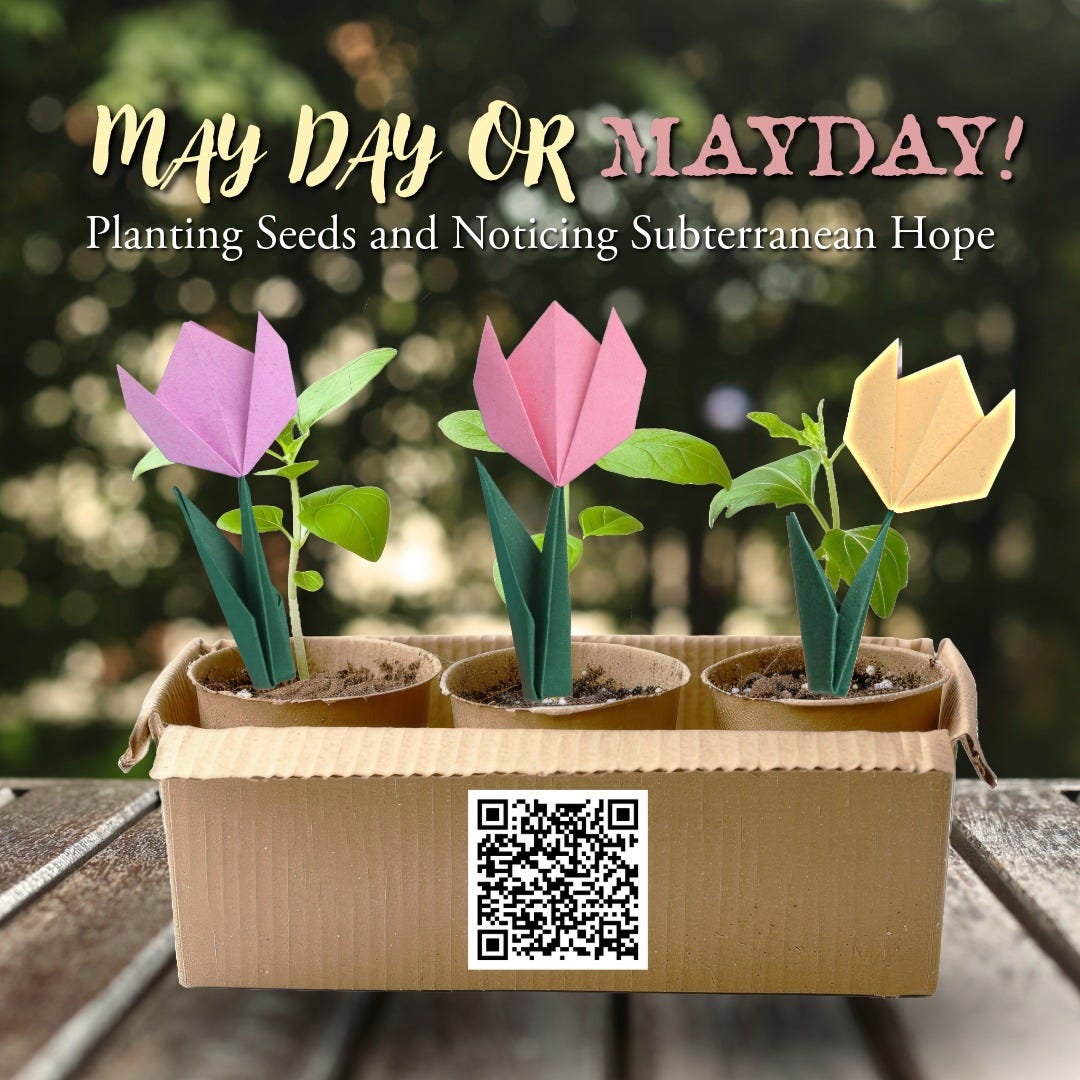
My contemplative community, Midwest Alliance for Mindfulness is offering an imaginative event upcoming. If you live nearby I hope you might join us:
The rest of this post is behind a paywall as I delve further into the personal and the political with additional observations and of course some resources. As always, reach out and ask me to lend a hand if financial barriers prevent you from subscribing, but you’d really like to read on.
Wishing You Delightful Daydreams,
Tracy